
môre · CVC Corp
atlas · Checkout
A dynamic cart for multi-product sales in CVC stores
Overview
CVC Corp’s stores sold through two internal platforms: Venda Mais, used by CVC franchises, and Venda Compartilhada, used by partner travel agencies. In both, the sales consultant serves the customer, builds the trip, negotiates the price and closes the payment. Cart and checkout were the point of greatest friction in this flow: the experience was outdated and required long, difficult training, to the point that consultants said it was easier to buy on CVC’s website than through the internal tool. Replacing both platforms was part of MAPA, the company’s strategy to unify its platform on two fronts: atlas, for sales, and kosmos, for after-sales. Checkout was where all of atlas’s products came together.
A cross-functional team
About 9 squads and 12 products flowed into the cart. Checkout brought flights, hotels and every other product together in a single purchase.
66 sales scenarios
Field research covered 7 stores over 13 days and mapped 66 sales scenarios before any design work began.
Dynamic cart
Consultants could now build free combinations, such as five flights, four hotels and three transfers, to compare prices and compatibility on a single screen.
78% of tasks rated easy
In usability tests with 8 consultants, 78% of tasks were rated easy before handoff to development.
01 The problem
The previous scenario
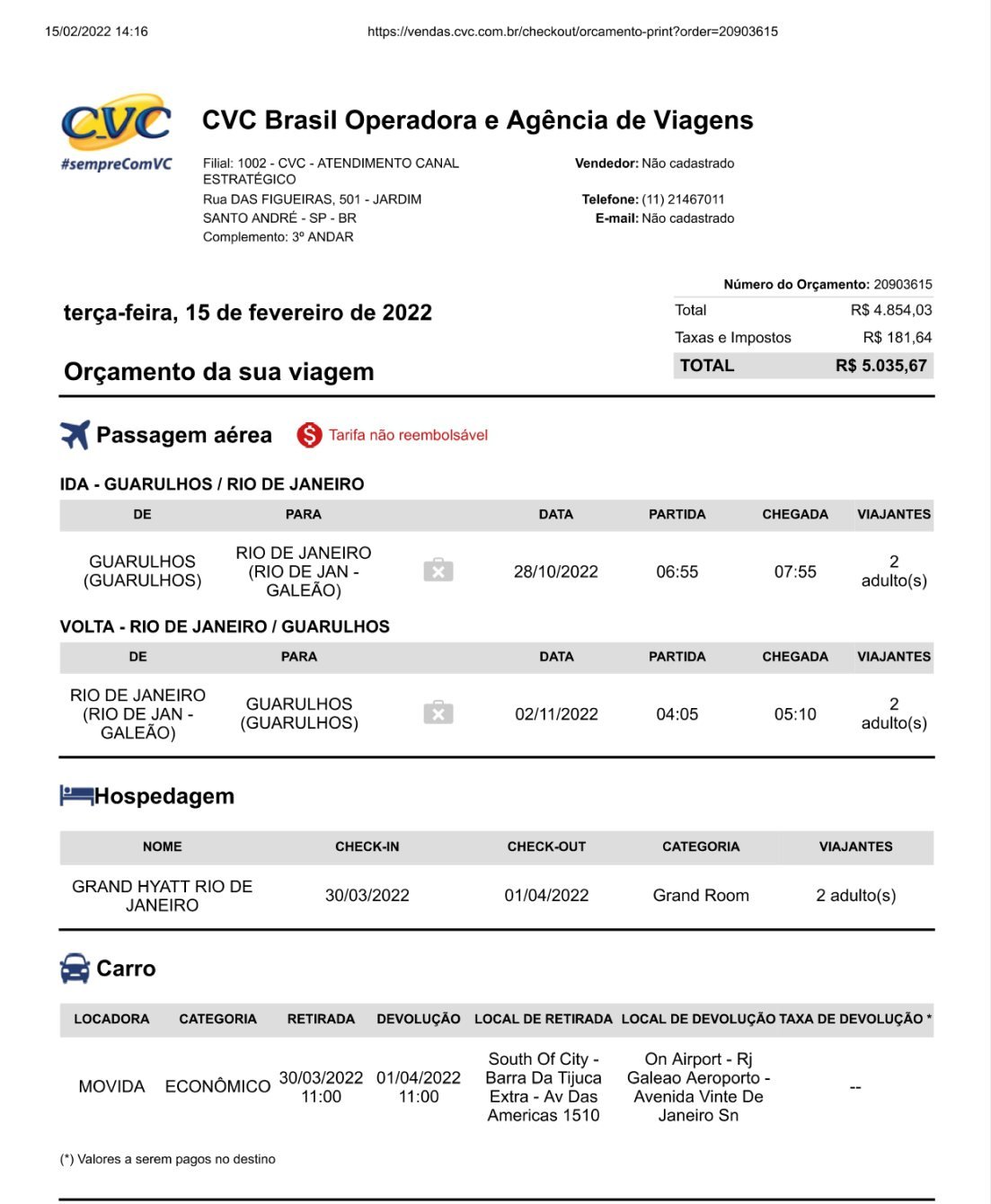
The consultant is the intermediary between the customer and the platform: they listen to what the customer wants, add the products, negotiate the price and complete the payment. On both platforms, this path ran through about five screens with redundant steps, and it slowed down precisely in the most complex, multi-product sales.
Because each cart accepted only one fixed combination, consultants created their own workaround to offer alternatives: they built several carts and sent the customer one link for each, which they called a dynamic quote. The customer received quote 1, 2, 3 and 4, each already closed, and struggled to compare them, which led to confusion and to buying the wrong product.
Checkout as the meeting point
atlas was organized into about 9 squads, responsible for roughly 12 products. The checkout team worked across all of them: each product, from flights to hotels, followed its own flow to the cart, where everything was combined into a single purchase that moved on to payment and, later, to after-sales in kosmos.
02 The process
-
7 stores visited
-
13 days in the field
-
66 sales scenarios mapped
Research at the store counter
The redesign started from field research led by the UX Research team. Before any design work, the researchers visited stores to observe how consultants worked: the equipment they used, how they served customers and how they built quotes in the existing system. They visited 7 stores over 13 days in the field and mapped 66 sales scenarios. Based on this material, the brief was to redesign the screens and add new mechanics to the cart and checkout.
Prototypes for testing
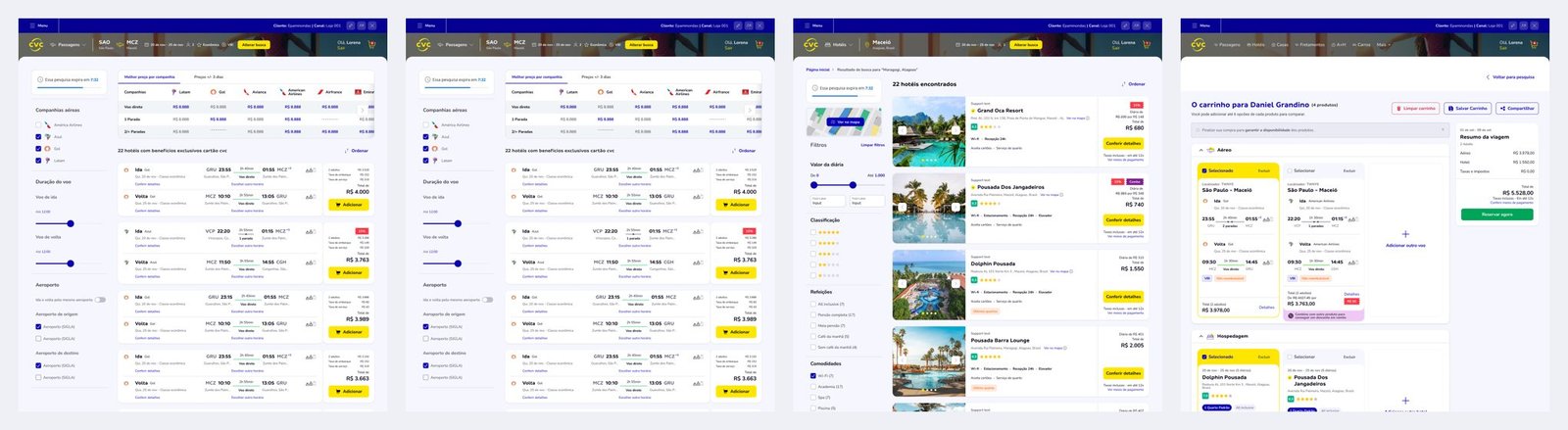
To test the solution, we built high-fidelity prototypes in Figma. Because of the cart’s flexibility, the prototypes were complex: they had to respond to the combinations each participant chose and show real prices, so the simulation would not break immersion during the session.
-
8 consultants from different stores
-
4 use scenarios per session
-
78% of tasks rated easy (1 or 2, on a 1 to 5 scale)
-
80% preferred a digital quote, by PDF or link
It felt simpler than the current one, I didn’t miss anything.
Store consultantUsability test of the new cart
I’d rather the PDF didn’t show each item’s individual price, so the customer doesn’t shop around with competitors.
Store consultantUsability test of the new cart
Usability testing
Together with the research team, we ran usability interviews with 8 consultants from different stores, with 4 use scenarios per session. 78% of tasks were rated easy (a score of 1 or 2 on a 1 to 5 scale), and 80% of consultants preferred to share the quote digitally, by PDF or link, rather than printed. The sessions were consolidated into a report, and the adjustments identified were applied to the design before handoff to development.
03 The solution
Concept: the dynamic cart
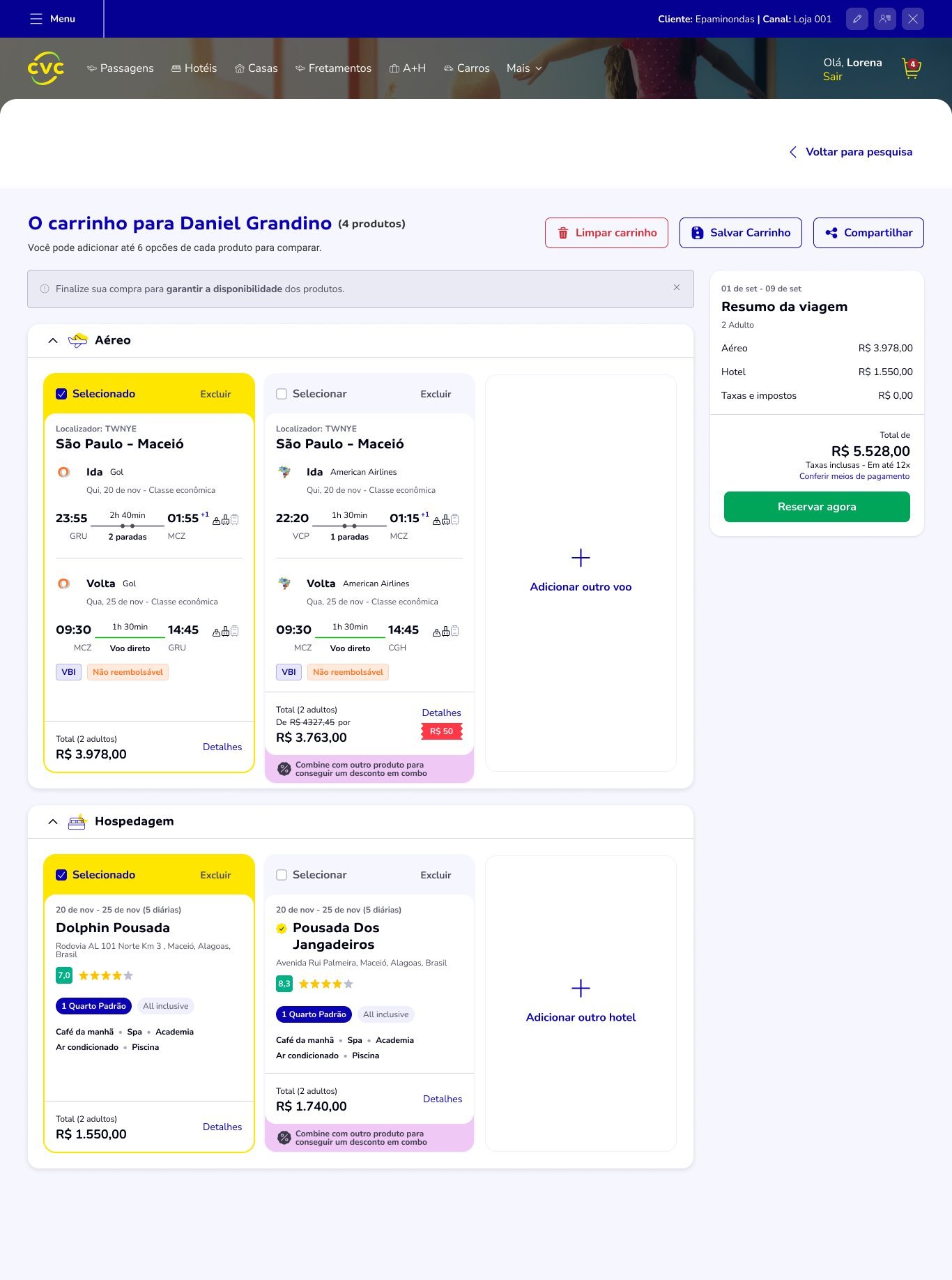
Together with product management, we explored alternatives and consolidated the proposal into a dynamic cart. It works like a deck of cards: the consultant gathers up to six options of the same product and of different products, such as five flights, four hotels, three transfers and two travel insurance plans, and all of them are laid out like cards on a table. Consultant and customer review and compare each option together, check which products are compatible with each other and arrive at the combination of cards that will become a sale. The steps that used to be spread across five screens were condensed into a single interface, with quick editing and flows adapted to each product type. The cart stops being the end of the flow and becomes a negotiation tool with the customer.
The new components were added to chuí, the design system atlas was built on.
Combined pricing
From the cart onward, design split into fronts: whoever led a front had the other designer as backup, and decisions were discussed together.
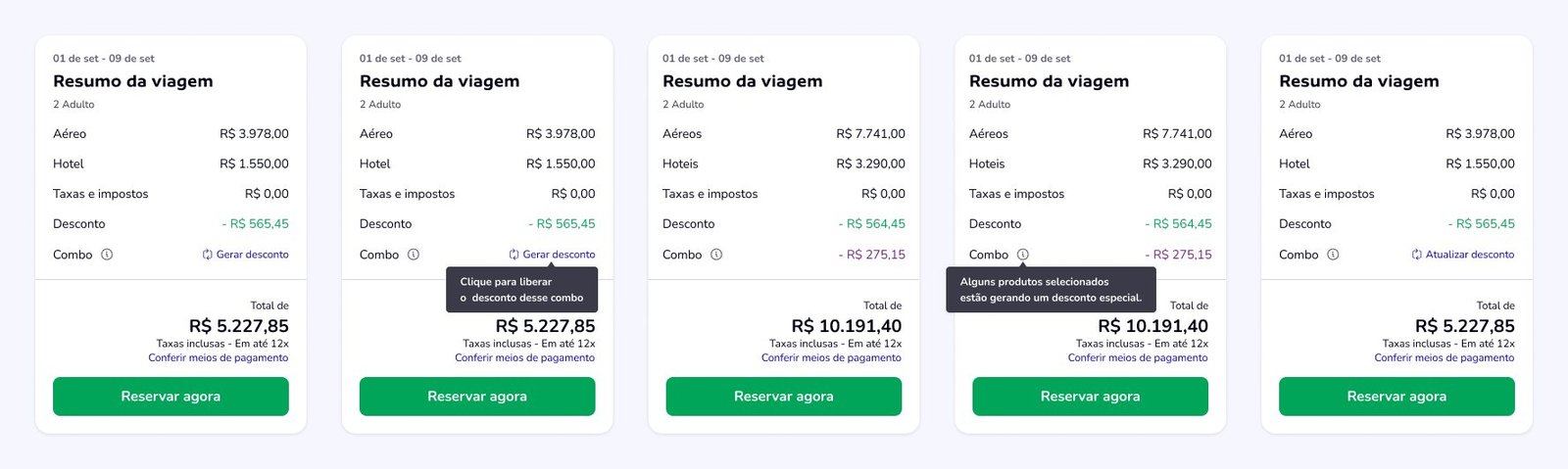
One front was combined pricing. Some product combinations, such as a flight with a specific hotel, unlocked a special discount, and we defined how this condition should appear and behave visually inside the cart.
The dynamic quote
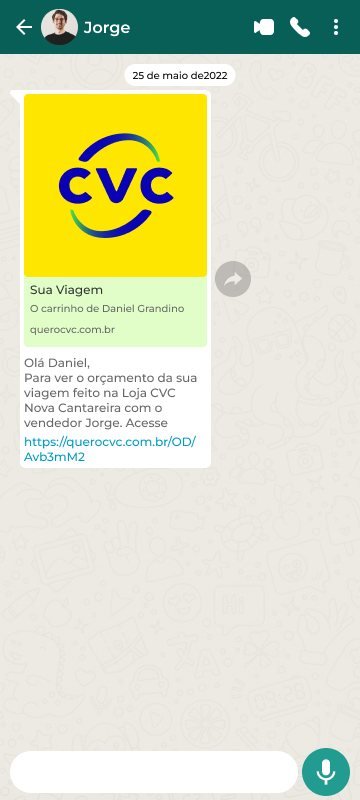
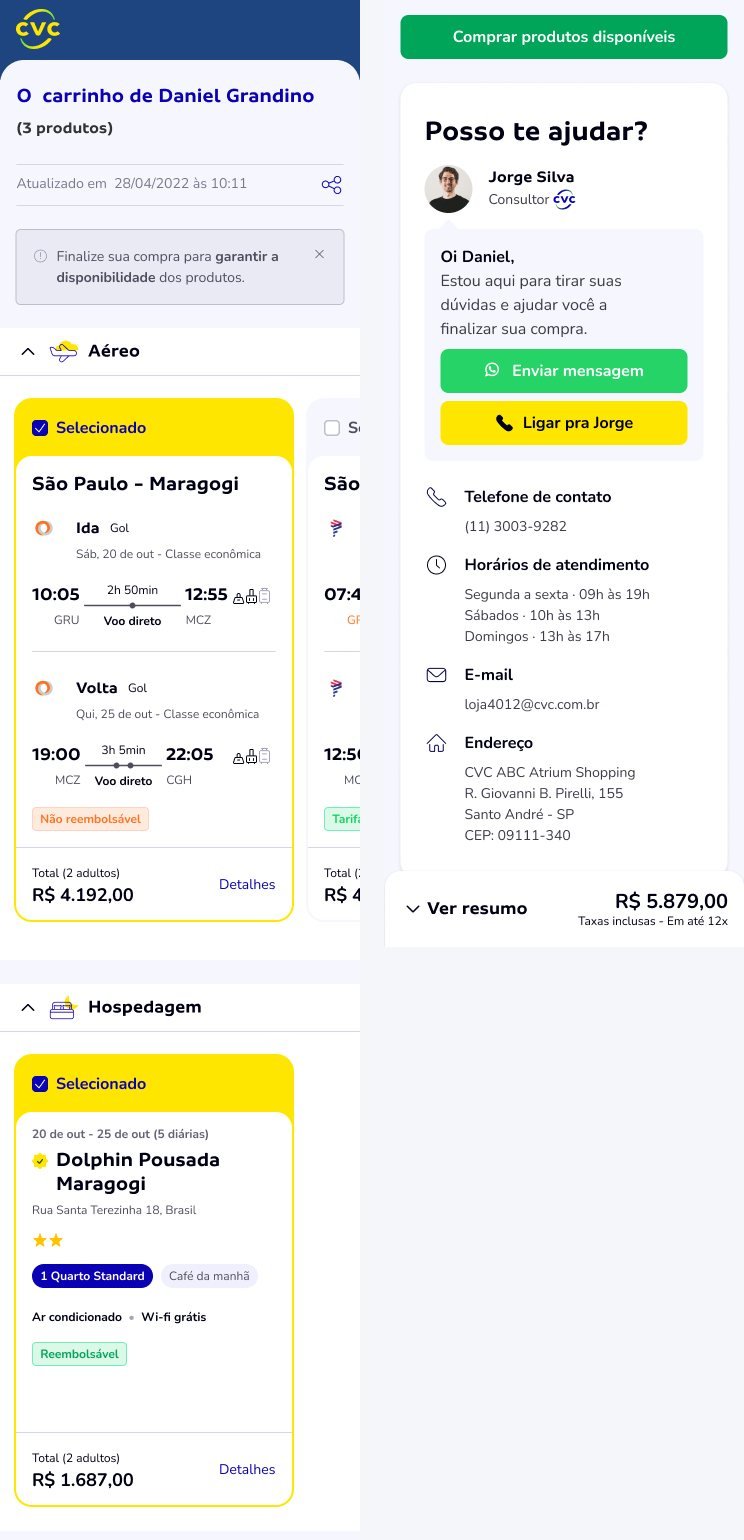
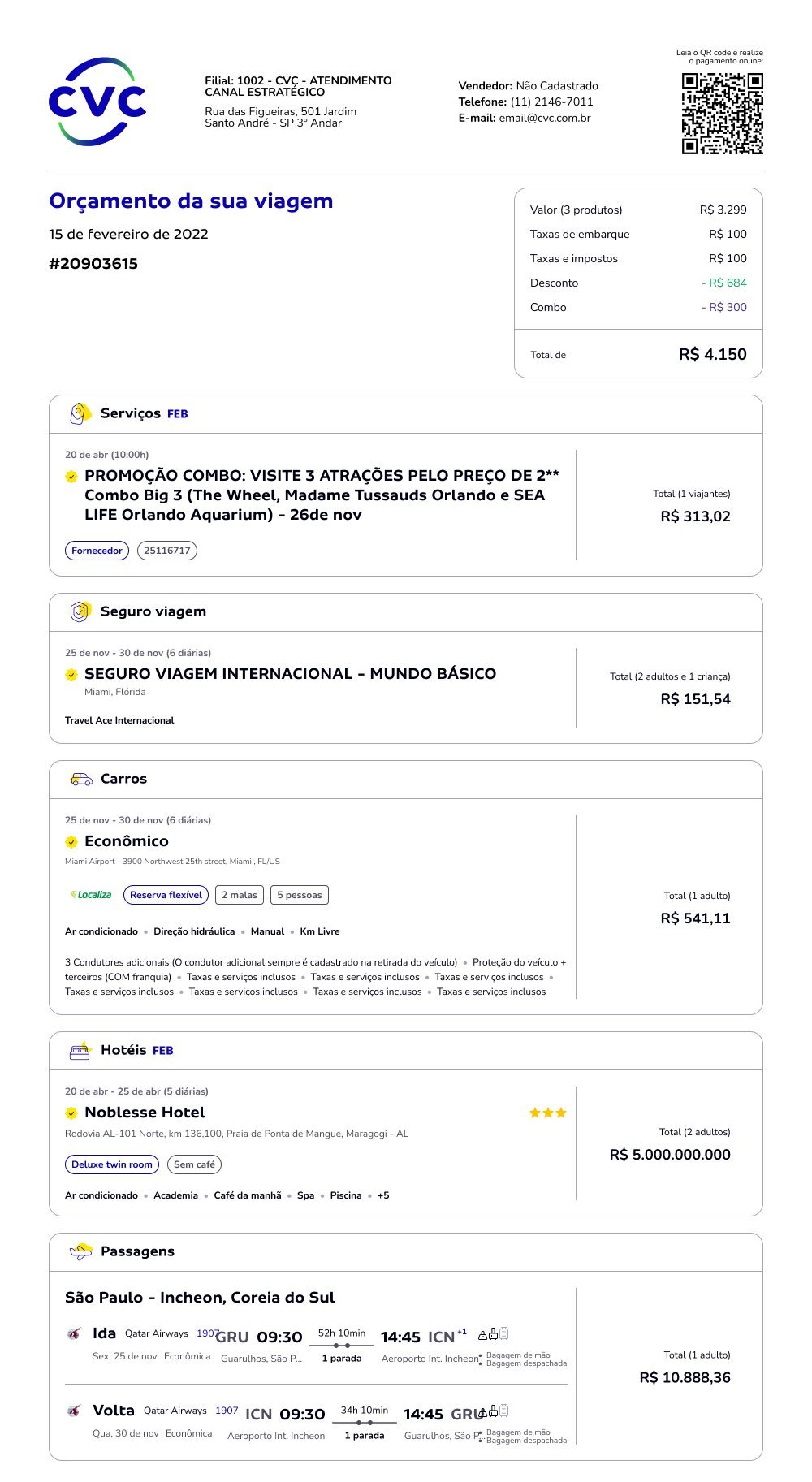
The other front, led by my design partner, was the new dynamic quote. Instead of several closed links, the consultant sends the customer a single link with a live version of the quote and the options built in the cart. Since airfares change often, the page updates automatically and lets the customer complete the payment right there, without going back to the consultant. The WhatsApp sharing screen, designed together, was also part of this delivery. The quote also gained standardized templates for digital and print formats.
Delivery and launch
The final prototype was presented and handed off to the development team, and the dynamic cart was implemented. In October 2022, atlas officially launched for consultants and received very positive feedback. Through the end of the year, we continued with targeted adjustments and refinements to improve the experience. For 2023, the goal was to explore new improvements and features for the platform, but in January the consultancy team was let go in a layoff. Even so, both legacy platforms were fully migrated, and atlas remains up and running as the sales platform for CVC stores.
Impact
From five screens to one: the checkout that became the consultant’s negotiation tool and is still in use in CVC stores.
Credits
- Product design
- Caio Colin, Wellen Nogueira
- UX lead
- Mayara Pillegi
- Product management
- Paula Reis, Rafaella Cambiaghi, Rafaela Bertolini, Giovanna Selli
- Research
- Gisele Albuquerque, Cris Uflacker